Fortune Tells

Dec. 4, 2020

5 Home Remodeling Projects With Top-Dollar Returns

Not all home improvements are created equal. These will reward you the most when it comes time to sell.


#1 New Roof

The cost: $7,500 

The return: 109% at $8,150

Considering it’s what’s between you and the elements, it’s a no-brainer. 

Not sure if you need a new roof? Signs you might include:

  • Shingles are missing, curling up, or covered in moss.

  • Gritty bits from the asphalt shingles are coming out the downspout. 

  • The sun’s shining through your attic. 

  • You notice stains on ceilings and walls.

  • Your energy bill is sky high.

#2 Hardwood Floors

The cost to refinish: $2,500

The return: 100% at $2,500

The cost to buy new: $5,500

The return: 91% at $5,000 


#3 New Garage Door

The cost: $2,300 (for a two-door)

The return: 87% at $2,000


#4 Better Insulation

The cost: $2,100

The return: 76% at $1,600 (plus the added savings on heating and cooling costs!)


#5 New Siding

The cost: $13,350

The return: 75% at $10,000


If you're interested in getting a free property valuation, click here to get started! Or click here to email me directly to discuss comparables in your neighborhood!

Posted in Selling Your Home
Dec. 3, 2020

These 5 Real Estate Trends Have Emerged From COVID-19


Today’s real estate trends reflect the reality that, after months of quarantine, Americans who have not been economically impacted by the pandemic are looking at their homes and realizing that they want something bigger and better. 

1. Location Independence

After months of remote work, buyers are cutting ties with the cities where they work, looking for more space and privacy in the suburbs, the country, and second-home destinations like South Lake Tahoe, Palm Beach, Hawaii, and the Hamptons. They are looking for larger homes, on large lots. Some are buying land when they can’t find what they want in a frenzied market. 

2. A Multi-Purpose Sanctuary

As Americans work, study, and exercise at home, they are expecting much more from their homes. “People are digging into their homes in a way that we haven’t seen since the 1950s,” says designer Patrick Mele. “People want to make their homes as singular and interesting and particular to them as they can.” They want space to exercise, and not just on a Peloton bike in the bedroom but in a light-filled room that can rival that canceled SoulCycle membership. They want a dedicated home office, and probably two, with good lighting and an elegant backdrop for a Zoom call. 

3. A Home, Not Just a Showpiece

Suzanne Kasler’s design clients are looking for spaces that are as comfortable as they are welcoming, with durable fabrics that will hold up to extra use. “Having a more comfortable and more accessible and more usable house is important because everybody is home and they need a place to go,” says Kasler. The home office, arguably the biggest “must-have” of the moment, needs to be functional, not just attractive, even if that means the printer is no longer hidden inside a cabinet. Homeowners are “not apologizing that it is a working office,” Cogar says. “Desk spaces get bigger, lighting gets better.”

4. Second Home, Primary Destination

The second home has taken on a central role for homeowners who retreated to theirs during the pandemic, and many homeowners are adding upgrades more typical of a primary residence, like more storage and expanded kitchen pantries. Those who didn’t own a second home before the pandemic are looking to buy one now, focusing on properties that could be used on a regular basis, with space for the children to study, and good wireless networks so the family can work, not just play.

Second-home markets, hence Southwest Florida, are seeing a surge in buyers. 

5. Outdoor Expansion

Pandemic life has been one lived largely outdoors, so homes with ample outdoor space are selling fast. Homeowners want those spaces to be welcoming, with pools, cabanas, and outdoor living rooms with features like a fireplace, a television, a bathroom, and a kitchen with a pizza oven. Homeowners are also looking for quiet nooks so they can escape without ever leaving. 

If you're interested in getting a free property valuation, click here to get started! Or click here to email me directly to discuss comparables in your neighborhood and my selling strategy!

Posted in Real Estate News
Nov. 21, 2020

Why Naples Is One Of The Happiest & Healthiest Cities In The U.S.A.


Naples has been making it into the "happiest and healthiest city" rankings for many years in a row. Thousands of people choose this city to become their home for hundreds of reasons. If you are looking for a perfect city to settle in and a lifestyle you can enjoy 365 days a year, Naples is certainly worth your consideration.

Let's find out why Naples is one of the happiest and healthiest cities in the United States.   

1. CLEANEST SAND AND GULF WATERS

According to a study by WalletHub, Naples is the number one beach town to live in. One of the top reasons for such a ranking is extremely clean sand and gulf waters. These pristine beaches bring tourists flocking all year round and have become world-famous as a high-class beach experience. These tourists only get a taste of what Naples residents enjoy each and every day. It’s also said that saltwater and sand have health benefits for the skin and the mind.

2. 300 DAYS OF SUNSHINE

It’s not called the Sunshine State for no reason. Naples has more than 300 days of sunshine per year, making it one of the sunniest places on Earth. Since sunshine triggers serotonin production in our brains, our mood lifts on sunny days. That's why Naples residents are some of the happiest people in the world.

3. LOW CRIME RATE

Crime rates in Naples are substantially below the United States average. In 2019, Naples ranked no.2 on the list of the safest cities in Florida. The feeling of safety contributes to the overall happiness and healthiness of the communities. Both violent and property crime rates in Naples are some of the lowest in the country.

4. NEAPOLITAN ARCHITECTURE

Naples is a modern city with an old-town feel. The reason being the Neapolitan architecture scattered around town. Huge skyscrapers aren't blocking your view of the water and sun, making the entire city appear calm, relaxing, and without the hustle and bustle of a beachside metropolis. Naples' city government doesn't allow tall buildings, large signs, or wide billboards to obscure what nature has to offer. If you live in Naples, you can take full advantage of its natural greenery's beauty and freshness.

5. WORLD-CLASS DINING

Naples offers an excellent opportunity for truly fine dining to test your palate and deliver something new every time out. 

Whether you prefer a classic American hamburger or a French cuisses de grenouille (the famous frog's legs), you can easily satisfy your cravings with the exquisite variety and selections found around town. Romantic restaurants, comfy cafes, and stylish coffee shops are keys to life enjoyment in Naples. Since it's one of the top tourist destinations, restaurants go out of their way to please clients.

6. OUTDOOR ACTIVITIES

Naples residents have an impressive choice of things to do when they have free time, especially if they want some fun in the sun. From boating and golfing to fishing and wildlife sightings, it's impossible to stay bored in Naples if you love nature.

Naples has over a dozen parks where residents and tourists can enjoy nature, lush greenery, wildlife, and much more.

7. FRESH FOOD MARKETS

Naples has a variety of farmer's markets where people can buy fresh and healthy food. Access to high-quality food is the key to healthy eating habits and you’ll find plenty of locally grown, organic foods to add to your diet.

8. JOB OPPORTUNITIES

When people have excellent opportunities to earn money, happiness is hard to avoid. Unemployment rates in the city are at record lows. Meanwhile, according to the AdvisorSmith study, Naples is one of the top cities where U.S. manufacturing is thriving.

9. EXCELLENT, RELAXING ATMOSPHERE

All of the above reasons make Naples one of the happiest spots in the world. Tourists come to enjoy the sun and have fun while residents take full advantage of the weather, water, food, and entertainment. It's not surprising that the atmosphere in the city is happy and relaxing.

Living in Naples brings you a permanent vacation. Excellent weather, tasty and healthy food, close-knit communities, low crime rates, amazing greenery…the list goes on and on.


If you'd like to know more about living in Naples, Florida, click here to schedule a private tour of Naples' finest properties!

Posted in Naples Lifestyle
Nov. 19, 2020

NAR Forecast: 2021 Could Be Real Estate’s Best Winter Ever


NAR Chief Economist Yun predicts low mortgage rates (3.1%) next year, a 3% home price increase, 9% existing-home sales increase, and a 23% surge in new-home sales.

The housing market defied high unemployment and an economic recession and surged during the COVID-19 pandemic – and that isn’t likely to let up heading into the winter months, says National Association of Realtors® (NAR) Chief Economist Lawrence Yun, chief economist of the National Association of REALTORS® during Tuesday’s “Residential Economic Issues & Trends Forum” at the virtual 2020 REALTORS® Conference & Expo.“2020 has been a year of surprises,” Yun said during NAR’s virtual convention – notably with a robust housing market in the middle of a global pandemic.“This winter may be one of the best winters for sales activity,” Yun said. “It won’t match summer or spring sales numbers, but on a winter-to-winter comparison, this could be one of the best breakout years just based on the fact that pending contracts are at such a higher level.”Mortgage applications are also up 20% year-over-year, which reflects the number of buyers in the pipeline approved for mortgages and ready to buy. Home prices are up too: The median existing-home price for all housing types was $311,800 in September – a 14.8% increase from a year ago.What else does 2021 hold? Yun thinks the persistent housing shortage will likely keep home prices elevated, while new- and existing-home sales will continue to rise as record-low mortgage rates and a work-from-home trend give housing markets a boost.

Yun’s 2021 housing forecast and a recap of 2020 

  • Mortgage rates: 3.1% (3% for 2020 forecast)
  • New-home sales: +23% (+20% for 2020)
  • Existing-home sales: +9% (+3% for 2020)
  • Home prices: +3% (+6% for 2020)
  • GDP growth: +4% (-5% for 2020)
  • Job gains: +3 million (-7 million for 2020)
  • 10-year treasury: 1% (0.9% for 2020)
  • Consumer price inflation: 1.6% (1% for 2020)

Low mortgage rates are key against higher prices, Yun said when he addressed Realtors during the conference. One major factor contributing to the hot housing market has been record-low mortgage rates, under 3%. Yun predicts rates will continue to stay low into 2021. Mortgage rates are helping housing affordability balance against rising home prices.Yun sees work-from-home trends drive housing preferences, with more Americans rethinking where they call home. About half of Americans who used to work in an office are still working from home, which sparked widespread office vacancies in many cities, Yun said. Several tech companies have even announced a permanent transition to working from home for their employees. That could mean the latest move-to-the-suburbs trend could continue after the pandemic too, Yun said.“‘Work from home’ can also now mean ‘work from vacation home,’” Yun added, noting a rise in home sales in vacation and resort areas since the pandemic. “If you don’t have to commute every day, you might not mind living farther out.”

I understand you may have a lot of questions about the current state of our market. As your trusted real estate source and friend in real estate, you can rely on me. Click here to send a direct message to me with your questions.

Posted in Real Estate News
Nov. 19, 2020

Meet Southwest Florida's Men & Women Of The Year

Every region is defined by the people who populate it. Judging from this year’s class of Men & Women of the Year, Southwest Florida is defined by a unique mix of strivers and achievers all working in some way to make a positive impact on the area—and by extension, the world at large.

They represent different backgrounds and fields of endeavor, but they share one thing in common: they’ve all touched innumerable lives in ways that really count. These individuals run the gamut from an architect with environmental issues on his mind to an interior designer of rare vision to a philanthropist who has given more to her community than could ever be totaled in dollars and cents. They’ve worked in the areas of education, development, charities, the arts, and entrepreneurship, but their achievements stretch far beyond these fields.


Paul Arsenault  

The Activist Artist
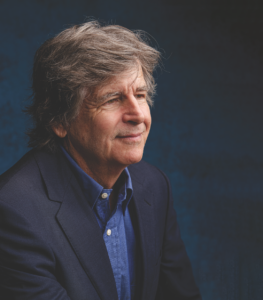
At what point did Paul Arsenault’s 46-year career of making art in Naples become a mission? Was it when he hosted a meeting in his home from which a historical museum on Marco Island grew? Or with his insistence that local museums were lacking in Black inclusivity? Perhaps it was with the work he has done for Calusa Waterkeeper, Friends of Fakahatchee, and other environmental groups. Or did it start with that first impact of Florida’s verdant native vegetation on his sensibilities back in 1973? Or while recording local heritage with his vibrant images of Calusa tribespeople and Florida’s cattle and horse heritage?

“I’m now more inclined to use my art as a vehicle for environmental awareness and solutions, and for honoring humanitarian and cultural icons,” the impressionist artist says.

In early 2020, before the pandemic crashed the natural rhythms of life, Arsenault had started work on a super-sized project for Naples Botanical Garden’s 10th anniversary, done on-site, plein air.

When the garden closed, the artist was forced to continue his work elsewhere­­ for the next few months—going between a rented space and his historic Old Naples home studio.

 He is exhibiting the show, which includes 10 scenes of the garden painted on 4-by-6-foot panels, along with historic paintings of other landmark gardens, through Nov. 8. “The show is important in particular because it was an exhibit outside my gallery, beyond cobbling together random works,” Arsenault says. “We put together an important exhibition dedicated to the evolution of our botanical garden while touching upon a few other great community gardens.”

The word “community” pops up often in the typically roving conversations with Arsenault, Naples’ unofficial artist laureate. He calls his achievement curating five artists to raise money back in 2008 to build the Marco Island Historical Museum (where his outdoor mural depicting a Calusa village scene greets visitors) “the sweetest, most productive association with the community.”

Currently, the artist is preparing a Shorelines exhibition, which will show at the Captiva Civic Association from February 18 through March 18. “That’s been the common denominator in how I move and choose to paint: the community on the water,” Arsenault says. — Chelle Koster Walton


Dwayne Bergmann

The Visionary Designer
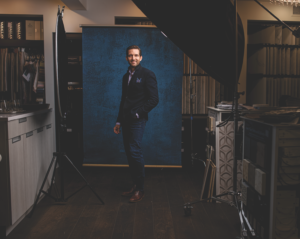
Dwayne Bergmann doesn’t think like many other interior designers.

For one, he grew up in a family of custom home builders and spent the formative years of his career working with HD Supply, the wholesale arm of Home Depot.

Not only has the Fort Myers-based designer mastered aesthetics, but he also understands the nuts and bolts that go into making a home.

That know-how gives him an edge in his field (most of his work comes from referrals from contractors who appreciate his order and savvy), but it’s the heart he puts into his projects that sets him apart. “I don’t run my business as if I have the only right perspective,” he says. “I don’t go in with a predisposed style or aesthetic.” The personal attention and drive to deliver on individuality contribute to Bergmann’s distinctive aesthetic.

Even his commercial projects, like The Southwest Florida Community Foundation Collaboratory, are proof of this. At the hands of another, the center may have been nice office space. But with Bergmann’s vision, the renovated train station-turned-community hub exudes style.

Bergmann’s life is the perfect example of using one’s talents and influence to better the world around us. The same heart that goes into his work is reflected in the roster of community initiatives he supports.

Look at any list of philanthropic affairs for a season and you’ll see Bergmann’s name on many committees. He and his husband, Luis, donate their talents and funds to Pace Center for Girls, Lee County; Better Together; SWFL Children’s Charities—the list goes on.  “I really don’t think you understand the level of happiness you can achieve until you’re giving back,” he says. And, while he values and supports national organizations, he prefers to invest his dollars and time locally.

He is also growing his business locally. This year marks the transition from Dwayne Bergmann Interiors as a design business to Dwayne Bergmann as a brand. The designer just opened a showroom on Naples’ Third Street South, where he also introduced his new cabinet line—a range of custom styles that take built-ins beyond the “boxes-and-doors” concept that is a common form, combining luxe materials into functional designs. Next comes his own furniture line in 2021 and a yet-to-be-announced licensed design collection the year after that.

We couldn’t think of a better brand to get behind. —Stephanie Granada


Vincenzo Betulia

The Big-Hearted Restaurateur-Chef
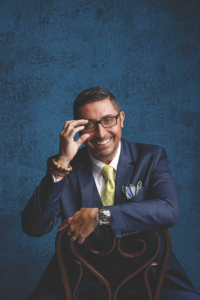
“I’m a fighter,” Naples restaurateur extraordinaire Vincenzo Betulia, says. “People rely on me. I can’t turn my back on them. I just can’t.” 

When the government order to close restaurants came in March, Betulia had 230 employees. He could have shuttered his Osteria Tulia, Bar Tulia, and The French restaurants on Fifth Avenue South. Instead, he and his business partners pulled trick after trick to keep the staff supported, along with the local farmers and other community purveyors they deal with. “They knew I was open for business not because I wanted to make money,” he says with conviction. “I could’ve sat on my nest egg. I’m not that person. I needed to provide some normalcy for the community.” 

Now, as Betulia gets ready to launch his fourth enterprise—Bar Tulia at Mercato, expected to open by the end of February—he looks back at the three months he worked without a day off to nimbly evolve his businesses to COVID-19 mode. He turned The French into a neighborhood grocery, cooked family-style meals to go, rented a parking lot to expand Tulia’s seating, began bottling then canning craft cocktails, and sold frosé by the quart–all the while donating boxed lunches and teacher gift cards to Naples schools, as well as continuing to pay employee’s health insurance. 

The community showed its appreciation for Betulia’s hard work to bring comfort during the chaos. It wasn’t unusual to see a $1,000 tip added to a $100 tab, he says. In a couple of weeks, tips amounting to $65,000 were divvied among employees that were furloughed.  

In less than a decade, Betulia has solidified his importance in the community. Before opening his first restaurant in Naples in 2013, he headed the kitchen at Campiello on Third Street South for nine years, after working his way up the ladder upon falling in love with Naples during a vacation in 1998. Then came Bar Tulia in 2015 and The French in 2017.

Mercato came to the chef to propose another Bar Tulia in North Naples—the space is planned as a marriage of Tulia, The French, and something entirely different that promises once again to redefine Naples dining. “I’m so proud to be a restaurant owner in Naples, Florida,” he says. His innovation, commitment, and instincts for creating convivial restaurants and a sense of security have put him in high regard. Now his generosity and caring have made him a local hero.

“I don’t have an option to fail,” he says. “It’s my family of 230.” —C.K.W.


Janet Cohen

The Lifetime Philanthropist
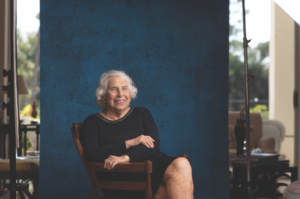
Janet Cohen has touched the lives of so many in Southwest Florida. Take the Jewish community, which now has a beautiful and updated museum to commemorate their history and culture. Or the students at Florida Gulf Coast University, where Cohen funded the Harvey and Janet Cohen Student Union (which is lovingly known as Harv’s Place on campus) to host career fairs and social events and provide quiet places for people to relax between classes. When asked about her contributions, she jokes, “You mean I did right for a change?”

Cohen’s charitable efforts in Southwest Florida date back to the ’90s when she and her late husband, Harvey, retired to the area. “I think it started with the Naples Philharmonic,” she ponders.

To Cohen, giving back isn’t about keeping score of the dollars or earning praise from peers, it’s about making a difference. Recounting her youth, Cohen says that even though her parents didn’t have much to give, they taught her the importance of supporting the community. Whether she’s helping a close friend behind the scenes or publicly pledging millions to a children’s cause—like the $3 million she gave to fund a garden at the Golisano Children’s Hospital of Southwest Florida to offer respite to sick children and their families—her sense of responsibility is evident.

“It’s a very good feeling to know that I’m accomplishing something worthwhile,” Cohen says. Soon after the garden project, she contributed to the creation of The Salvation Army Fran Cohen Youth Center in East Naples, in memory of her only daughter, Fran.

The next year, she was at it again, supporting the Holocaust Museum & Cohen Education Center by donating $1 million toward its new building off Tamiami Trail. Last year, other efforts led to the opening of Avow Hospice’s Aunt Janet’s House, where kids can benefit from bereavement therapy in a setting that feels more like a home than a therapist’s office. Her reason for such dedication to supporting her community: “I don’t know, maybe I’m turning into Florence Nightingale.” –Jaynie Bartley


David Corban

The Environmentalist Architect
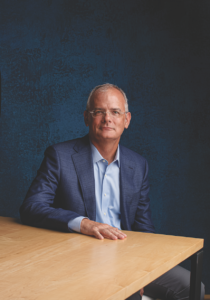
If you were to picture a nonprofit human-service organization’s building, you might conjure the image of a rather humdrum, budget-conscious complex. We wouldn’t fault you for that, but we’d point out that you certainly don’t know architect David Corban of Naples, who has created stunning spaces (fiscally responsible ones, of course) that honor nonprofit organizations’ missions, staffs and, critically, their clients.

Take Grace Place for Children & Families in Golden Gate and its contemporary facade and airy classrooms. “A well-designed school makes students pay more attention, and it makes teachers enjoy their day more,” he says. Or the Shelter for Abused Women & Children’s new Shelly Stayer Shelter, where Corban eschewed institutional-feeling hallways for apartment “pods” that give women a greater sense of ownership and the warmth of home.

His philosophy has nonprofits knocking at his door. Other clients include the Holocaust Museum & Cohen Education Center, Catholic Charities’ Judy Sullivan Family Resource Center, and Friends of Fakahatchee, which contracted Corban to make their longtime dream for a new boardwalk and interpretation center come true. 

“I think architects can help with improving the social good,” Corban says. “I think we owe it to (nonprofits and their clients) to give them our best effort—to give them the best space we can provide.” 

He’s done plenty of commercial work, too, including the acclaimed Celebration Park, a waterfront bar and food truck venue, for which he received the coveted Honor Award of Excellence in the New Work category from the American Institute of Architects Florida chapter earlier this year. 

Regardless of project type, environmental consciousness pervades Corban’s work. Grace Place is the first LEED-certified campus in Collier County; the under-construction Lutgert Professional Center is being built to LEED standards as well. Corban’s own self-designed home on Halderman Creek is considered one of the county’s greenest and was listed among the “top 100 buildings built in Florida in the past 100 years” by the AIA. “Buildings are right up there with transportation and industry as the biggest burners of fossil fuels,” Corban says. “Architects have a huge responsibility to be part of the solution for climate change.” —Jennifer Reed


JoAnn Elardo

The Spirited Community Builder
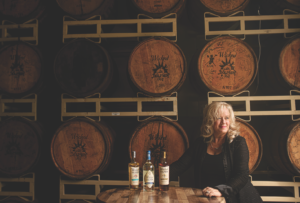
If you said JoAnn Elardo is driven to create a stellar product and a standout business, you’d be right. Partially.

If you said she’s driven to do those things—plus invigorate her community—you would have pinned her down precisely. 

Elardo is the founder of Wicked Dolphin Artisan Rum in Cape Coral. The distillery’s bright blue exterior is quirky, like her life story: A stint at  Merrill Lynch, a leap into television production and sales, then a bold move to Poland where Elardo established a footwear distributing company and an athletic clothing and footwear shop that erupted into a 30-store chain throughout Eastern and Central Europe.

Back stateside in 2008, she and her husband, Robert, settled in Cape Coral and leaped into civic life. “I noticed the need for an animal shelter in Cape Coral. We had almost 200,000 people at the time, and no animal shelter,” she says. (She has three adopted pooches.) The no-kill Cape Coral Animal Shelter opened last March. “We have a really good community here in the Cape,” Elardo says. “I think we’re quiet–but we’re mighty.”

She opened Wicked Dolphin in 2012 and looked to leverage it for good. That takes many shapes—bolstering regional tourism; insisting on Florida-grown sugar and fruits; persuading state lawmakers to change Prohibition-era rules (more than 25 new distilleries have opened since); supporting area nonprofits, and diversifying the Cape’s economic base. When the pandemic struck, she and Dan Termini, her nephew and distiller, shifted from making drinkable alcohol to the hand-sanitizing variety. They gave it away—first to Lee Health, and then to the community.

Sustainability matters, too. Elardo has installed technology to minimize water use and planted dozens of trees at the distillery’s site. “It’s really important to give back to the community. I think we all do in a lot of ways. But I think for some people it definitely is their purpose and they’re driven to it,” she says. 

Last summer, Elardo sold her other business, Big Blue Brewing, to concentrate on Wicked Dolphin. You can bet there will be much more coming from that bright blue building—and it won’t just be rum. —J.R.


Sydney Kitson

The Sustainable Developer
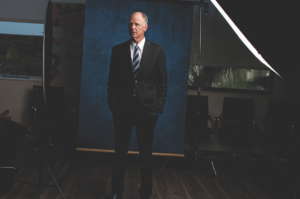
What a year to be in charge!

Last January, Sydney Kitson was elected to chairman of the Board of Governors for the State University System of Florida, supervisors of the state’s 12 higher-learning institutions. He delved in with the gusto you’d expect from an ex-NFL’er and the guy who is building his own town—the solar-powered, high-tech, civic-minded Babcock Ranch in Charlotte County. “One of my primary initiatives was to work with the universities to prepare our students to work with the business community and really marry those two,” says Kitson, who is also a past chairman of the Florida Chamber of Commerce board and incoming chairman of the Florida Council of 100. Three months later, COVID-19 erupted. 

Goodbye, long-term visioning. Hello, crisis management. 

Seventy thousand professors took their classes online, 420,000 students logged in from home. Meanwhile, Kitson oversaw the delicate work of crafting a reopening blueprint. The agreed-upon plan offered both universal guidance and ample flexibility. Not everyone was pleased—a statewide faculty union opposed in-person instruction—but Kitson stands behind the decision to resume live operations and believes the universities will anchor the state’s pandemic recovery. It’s a roundabout way of achieving his education-business union, but, hey, Kitson is all about the long game. 

Should you need proof, look to Babcock Ranch. Kitson conceived the town in the early aughts, negotiated a historic land purchase, persevered through the Great Recession, and welcomed the first residents in 2018. Pandemic notwithstanding, sales remain brisk, construction endures and environmental benefits mount. (The carbon offset from the town’s Florida Power & Light solar facilities is equivalent to removing some 24,000 cars from the road annually.)

Building a town would be quite enough for most businesspeople. Not this one. “You know, in life, you don’t get to choose the timing of opportunities,” says the former guard for the Green Bay Packers and Dallas Cowboys. That’s why he said “yes” to the Board of Governors, the Florida Chamber of Commerce, the Council of 100, and to any other number of leadership invitations. “When that opportunity presents itself, you have a choice to make.” 

We’ll happily assert that Floridians are better off for Kitson’s decisions.—J.R.


Jennifer McCurry

The Next-Gen Philanthropist
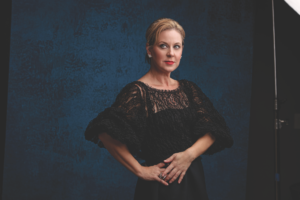
Normally, at this time of year, Jennifer McCurry is making the rounds in the ballrooms of Naples, helping raise millions for charity. This year, many of those events have been canceled due to the pandemic. But the need to raise money will remain. “We’ll need to get creative this year,” she says.

Thankfully, McCurry has a knack for the creative.

She comes from a tight-knit extended family in Iowa that always encouraged her artistic side. Her parents, Susie and David McCurry came to Naples about 20 years ago, and she followed a few years after. A budding jewelry designer with a degree from the Gemological Institute of America, McCurry held a trunk show for her line at Marissa Collections. She eventually became the boutique’s jewelry and accessories buyer, helping build the collection to feature more than 60 designers. In recent years, she’s shifted her focus. “It’s hard to explain,” she says. “You feel like you’ve done everything, but then you want to do more.”

She had become a mother of twin boys, who are now 4 years old. And she started to get more involved in philanthropy. Like her parents, she had been a fixture at Naples’ many galas. But recently, she started getting more involved in organizing. In the last couple of years, she co-chaired the American Cancer Society’s Bucket List Bash and the Naples Zoo Gala. Last year, the zoo event raised a record $1.3 million with her help.

Her reasons for donating time and energy are varied: She became more involved at the zoo after getting a behind-the-scenes tour from CEO Jack Mulvena; she joined with the cancer society after watching so many friends and family suffer from the disease. But, overall, she just feels a strong desire to give back to her community.

Typically, McCurry attends and supports more than a dozen events in a social season. And though this year will be different, she knows Naples will step up. “We will need to continue to support each other and remain dedicated to our causes,” she says. “I believe more than ever, it should be a year of gratitude and appreciation.” —Justin Paprocki


Harlan Parrish

The Education Crusader
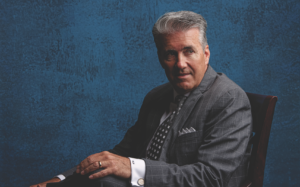
Just a glance at Harlan Parrish’s resume finds an impressive list of volunteer experience: current chairman of the Foundation for Lee County Public Schools, longtime involvement in the United Way, executive council member for Florida Gulf Coast University’s economic and finance department. At times, he’s served on six or seven boards at once.

Impressive, but it’s not about the resume. As he tells his younger colleagues at FineMark National Bank and Trust, where he’s the Lee County president, volunteering isn’t a career booster. It’s about making the place you live in better. “Find something you’re passionate about,” he tells them. “And don’t just serve, take on a leadership position.”

The Alabama native has lived on and off in Southwest Florida for more than 20 years along with his wife, Kristi, and two children, Drew and Elise. As he rose in the ranks of the local banking industry, his reputation grew as someone who was willing to lend his leadership to help nonprofits flourish. “We live here and we work here; we want to make this place a great place for everybody to live and work,” he says.

He did leave briefly to serve as a CEO of an Alabama-based bank. But after four years, he was lured back to Florida in 2015 to join FineMark, where he has been since. FineMark president Joe Catti played a big role in tempting him to return, but it also had a lot do to with the three Ws of Southwest Florida, he says: “weather, water and the way of life.”

All this time, he’s been especially committed to the Lee schools foundation, joining shortly after arriving in the area in the late ’90s and even staying involved while he was living back in Alabama. He also serves as a mentor with the foundation’s Take Stock in Children program. His passion for education starts with his father, a U.S. Air Force veteran who took night classes to earn bachelor’s and master’s degrees. Parrish himself worked multiple jobs to put himself through college at Auburn University. “My parents said, ‘The only place where ‘success’ comes before ‘work’ is in the dictionary.’” —J.P.  

With so many community influencers in Southwest Florida, all wholeheartedly dedicated to our quality of life, it's no wonder so many people want to call this little slice of heaven - home. Click here to contact me today to start your search journey. Or if you're currently a homeowner and would like to get a complimentary home valuation, as your fellow neighbor and trusted real estate professional, I'm here to assist you.
Posted in Naples Lifestyle
Nov. 17, 2020

What Buyers Focus On Most When Touring A Home, According To Eye-Tracking Software

Turns out, it isn’t all about the stainless steel appliances.

One of the many mantras in the real estate world is the saying “kitchens sell houses,” but until now there has been very little information about exactly what it was in a kitchen that would make buyers pay attention. With the help of a few homebuyers wearing glasses that track eye movements, we are beginning to have some hard facts.

It isn’t the shiny metallic fridge or the latest high-tech dishwasher their eyes go to when they first walk in the kitchen. It’s the oven. Many of the buyers in the study would go so far as to look inside the oven, and some of them would even turn it on to see how well it worked. So if you’re selling your home, make sure the oven is so clean it sparkles inside and out. If it isn’t in working order or has a few bad burners, you don’t necessarily have to get it replaced, but you might consider offering the buyer a credit for a new one.

Bedrooms are one of the next priorities in a house that can make or break a sale and eye-tracking software reveals a buyer’s eyes go straight to the bed when they walk into the room. Most likely buyers are wondering if their bed will fit in the space and if there is enough room to fit the rest of their furniture as well. This means if you’re in triage mode when it comes to decluttering on short notice, make the bedrooms a priority over other rooms in the house.

Outdoor accessibility was another big takeaway from the study. When buyers walked into a room that accessed the backyard their eyes immediately went to the outdoor space and the doors that opened out to it. Make sure the windows and doors (if they have glass) are as clean as can be so they show off the view to the outdoors in the best way possible.

But how about those stainless steel appliances? Are they worth it in the end? This study wasn’t designed to measure whether people’s eyes looked at stainless steel more than other types of finishes, but I’ll pass on the main reason why they have become so much of a trend: They can make a small kitchen look much bigger. The reflective surface acts the same way a mirror does by bouncing light around the room and giving the impression of spaciousness. To continue with the mirror example, a designer once told me hanging a mirror is almost as good as adding a window to a room. Stainless steel can have the same impact within a kitchen so it is still worth keeping it in mind if you are going to buy new appliances.

Now that I have your attention, let's go tour lots of properties with gourmet kitchens featuring the best stainless steel high-end appliances and massive master suites. Click here to connect with me and schedule private tours! 

Posted in Buyer Trends
Nov. 15, 2020

The Top Investment Strategies For Your Retirement

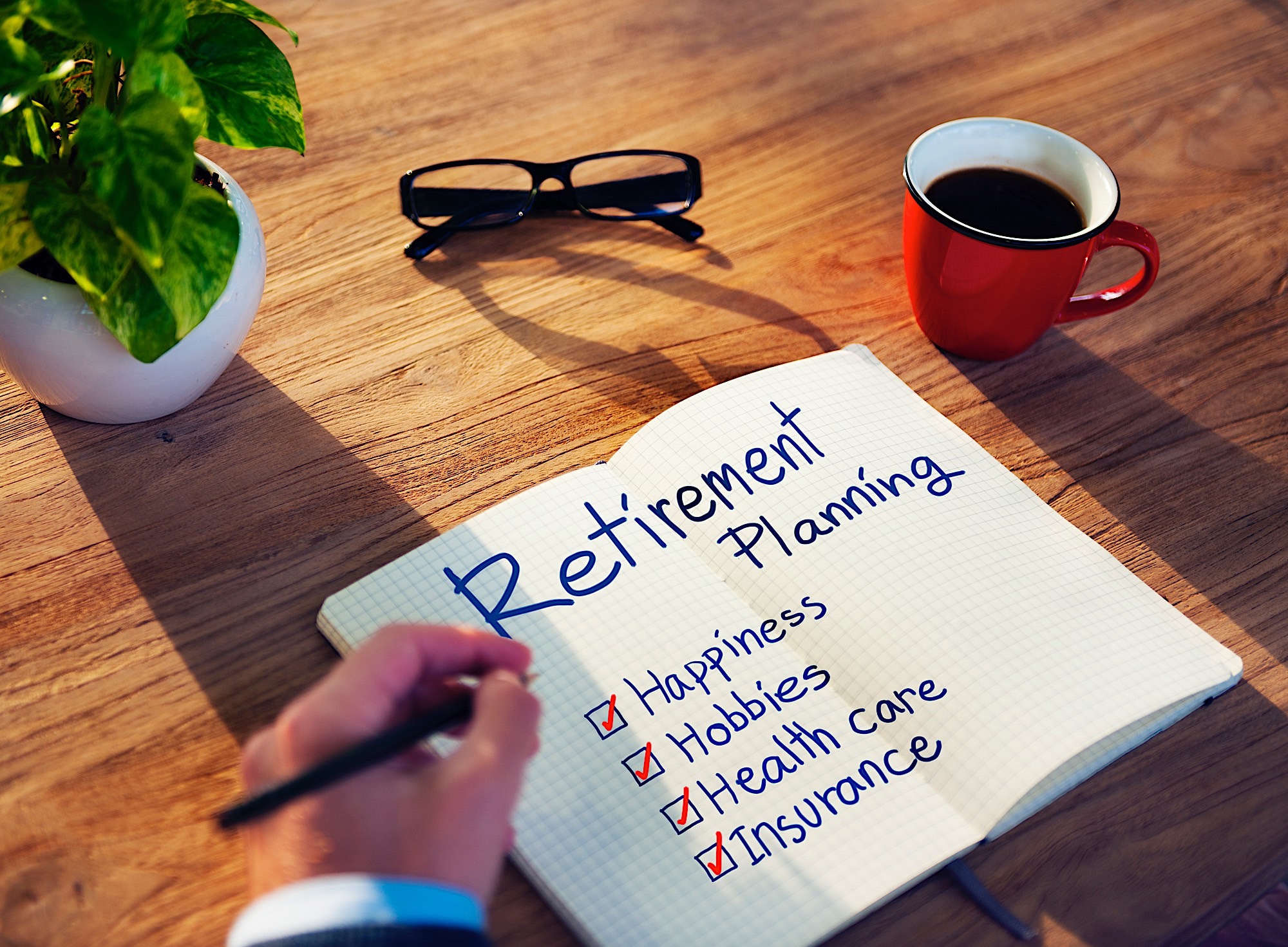
Everyone should know by now that you need to prepare for retirement. But what people don’t always know is how to go about planning for retirement, and what the best retirement investment strategies might be. Whether you’re just starting out in your 20s or reaching the pinnacle of your career, you should start investing for retirement right away. In this article, we’ll walk you through the top strategies for retirement planning. Then, we’ll reveal the top tips on how to invest your retirement savings. You’ll learn not just how to save for retirement, but then put those savings to work so that they grow while you sleep.

best retirement investments

Top 10 Investment Strategies For Retirement Planning

  1. Contribute To Your 401K
  2. Consider yourself lucky if you have an employer who sponsors a 401(k) plan. Consider yourself even more lucky if they offer 401(k) matching. According to Investopedia, a 401(k) is a tax-advantaged retirement account sponsored by employers. As an employee, you make contributions through automatic payroll deduction. This has the added benefit of lowering your taxable income. Do your best to contribute as much of your paycheck as you can, especially if there is a minimum to qualify for employer matching. The IRS states that the contribution limit in 2020 is $19,500. Employees over the age of 50 are allowed to make additional catch-up contributions of $6,500. One thing to be careful of is to ensure you don’t touch these accounts until you reach retirement age. Otherwise, you will be heavily taxed if you make a premature withdrawal.
  3. Open An IRA Or A Roth IRA
  4. If your employer doesn’t offer a 401(k), then don’t worry, there are other options. An IRA, or an individual retirement account, holds similar benefits to a 401(k). It offers tax-deductible contributions and tax-free growth. The only real downside is that you have to open up and maintain the IRA yourself through a private financial entity, like a bank or brokerage. If you’re concerned about making tax-free withdrawals during retirement, then consider a Roth IRA. The Roth IRA differs from a traditional IRA in that you make after-tax contributions. Once you’ve made your contributions, your money actually grows tax-free. With a traditional IRA, your earnings don’t get taxed while you hold the account, but you will get taxed later on when you’re making withdrawals. Both options offer advantages and disadvantages, with neither being superior. It’s a matter of selecting the option that best fits your retirement goals.
  5. Open A Health Savings Account
  6. The harsh reality is that your health expenses likely will increase significantly in your golden years. In fact, Fidelity Investments estimates that a couple in their mid-60’s retiring today could pay $285,000 in healthcare and medical expenses during retirement. Keeping this large sum in mind, preparing as early as possible is necessary. Health Savings Accounts (HSAs) are a great way to start preparing ahead of time. These accounts are similar to 401(k)s but are intended to pay for healthcare expenses. Contributions are tax-deductible, any growth is tax-free, and withdrawals are tax-free if they are spent on qualifying healthcare expenses.
  7. Be Aware Of Retirement Fund Fees
  8. When researching what type of retirement investment strategy you’d like to follow, be sure to double-check the fine print and find out what fees you’ll be charged. For example, mutual funds charge portfolio-management fees. Do your research and identify options that charge the lowest fees possible. If fees are unavoidable, then make sure your money is going toward a product of value. You don’t want these fees to add up and start eating away at your bottom line.
  9. Buy A Fixed Annuity
  10. The idea of outliving your savings during retirement is a scary concept. Another scary scenario to think about is your retirement investments performing poorly. What you can do to hedge and protect yourself against these outcomes is to invest in an annuity. A fixed annuity is an insurance product that will provide you with a set income for a certain amount of time. The timeline of when you begin to receive benefits, and for how long, are dependent on what type of fixed annuity you buy.
  11. Utilize Saver’s Credit
  12. If some type of tax credit is available to you, then always take advantage of it. Based on your adjusted gross income (AGI), your IRA or 401(k) contributions can get you qualified for a tax credit. These are credits that can help you save significantly in your income taxes each year. You can receive up to $1,000 if you are filing alone, and $2,000 if you are married and filing jointly. The credits you receive are based on your personal contributions, so it’s an incentive to start putting more towards your retirement plan.
  13. Delay Social Security Benefit Collection
  14. Some savvy retirees will delay their collection of social security benefits. The full retirement age (FRA) under the social security plan is currently 66. Did you know that the longer you wait, the more you can collect? For example, a retiree who waited until the age of 70 could potentially increase their annual payments by 8 percent. Another tip is to be strategic with your partner if you’re married. If you have a substantial difference in income, it would be wise to wait to start collecting. This way, you can collect the benefits under the higher earner in the couple.
  15. Prepare For Inflation
  16. It’s great if you are tucking savings away for retirement and letting those savings grow. However, have you stopped and thought about whether that growth will be enough to beat out inflation? On average, the inflation rate has been roughly 3 percent. That means that any amount of money today will be that much less valuable in the future. Whatever you’ve calculated as your retirement savings goal will be less valuable in the future because of inflation. In other words, it might not be enough. Whatever investment retirement strategy you put together might be, be sure to account for inflation.
  17. Assess Risk Tolerance
  18. When considering different retirement investment strategies, make sure to take your risk tolerance into account. Some types of investments might offer higher returns but are often associated with higher levels of risk. Not all investments are created equal, so you’ll want to make sure that you feel comfortable with the portfolio you create. Be sure to check out this article on different long-term investment strategies, where we discuss many different strategies with an assessment of risk levels for each.
  19. LAST TIP! Create A Withdrawal Strategy

You’ve saved up a nest egg for retirement – great! However, have you thought about how much, and how often, you’ll be withdrawing from your retirement accounts? Will you be slammed with penalties with each withdrawal?

A withdrawal strategy is an important but often forgotten aspect of saving for retirement. Although it might be a problem for tomorrow, you may regret not considering this aspect. When you’re actually retired and depending on your retirement income and nothing else, fees, taxes, and penalties could sting that much more.

Experts recommend creating your withdrawal strategy at least 5 years before you retire. This is something you should definitely address with a financial advisor.

Naples consistently ranks as the #1 city to retire and most importantly one of the nation's healthiest cities. Click here to learn more about the well-being benefits of retirement living in sunny Naples, FL.

Posted in Finances
Nov. 13, 2020

Fla.’s Housing Market: More Sales, Rising Median Prices, Higher Buyer Demands


“Florida’s housing sector continues to be a bright spot for the state’s economy amid the ongoing pandemic,” says 2020 Florida Realtors President Barry Grooms, a Realtor, and co-owner of Florida Suncoast Real Estate Inc. in Bradenton. 

According to Florida Realtors Chief Economist Dr. Brad O’Connor, the September data reported a significant milestone for 2020: The year-to-date total of closed existing single-family home sales now exceeds the total from the first nine months of 2019.

“Given all that’s occurred this year, it’s hard to believe we’re already in positive territory again, but here we are,” he says. “And all indications are that we will continue to see strong sales this fall as mortgage interest rates will almost certainly remain at or near record lows. 

The national inventory shortage is the biggest constraint to the housing market right now, O’Connor says.

If you have any questions about the Naples real estate market, click here to schedule a confidential meeting. I'd be happy to hear from you!